
Redding vs Easton Real Estate
Search Redding vs Easton Homes
Contact Us
THE COMPARISON THAT MATTERS
Redding and Easton are the two towns in Fairfield County that buyers mention in the same breath — always together, rarely decided between. I’ve watched families spend six months driving back and forth on Route 58 and Sport Hill Road trying to pick one. Both towns sit in the rural northern tier of the county, both are zoned at two acres minimum, both attract buyers who have consciously rejected the train-town lifestyle of Darien or New Canaan in favor of something quieter, larger, and less socially pressured. But they are not the same town. The distinctions are real, and they matter enormously depending on what you actually want from the next chapter of your life.
REAL ESTATE MARKET
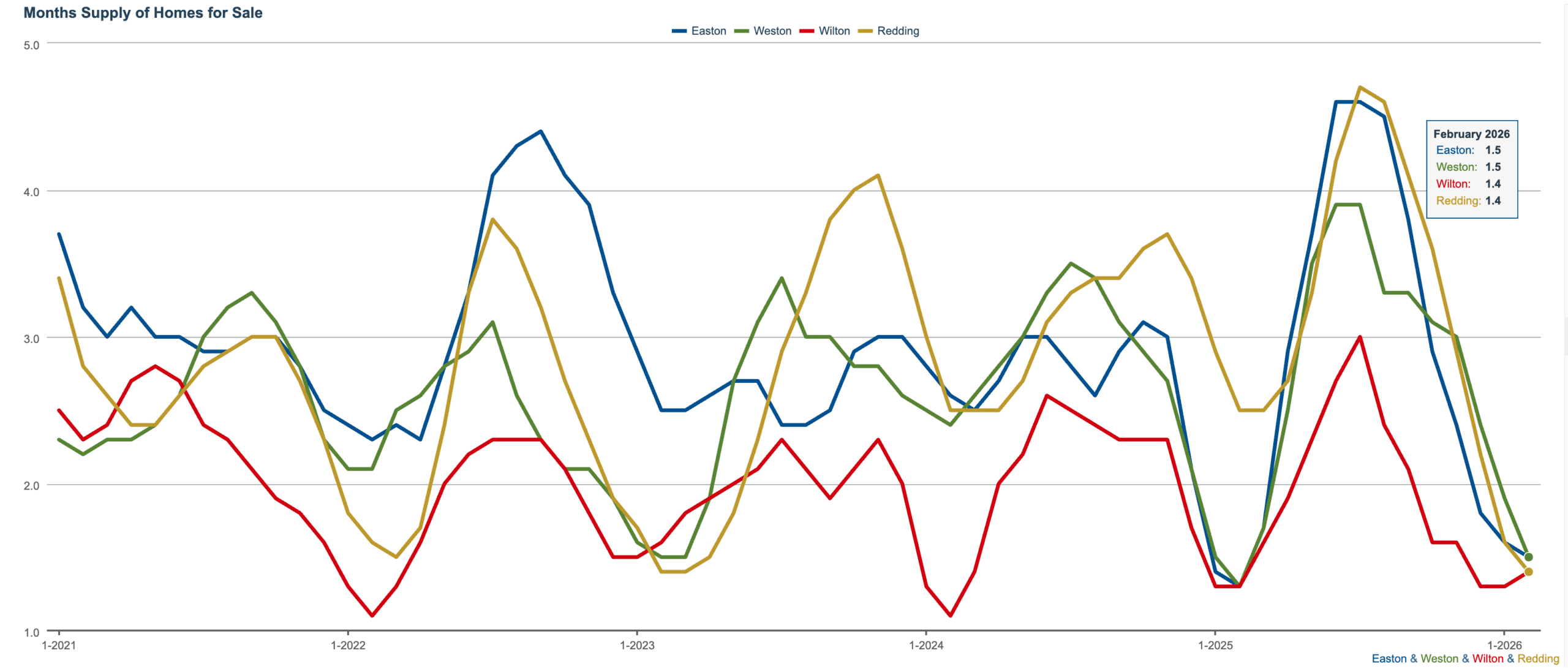
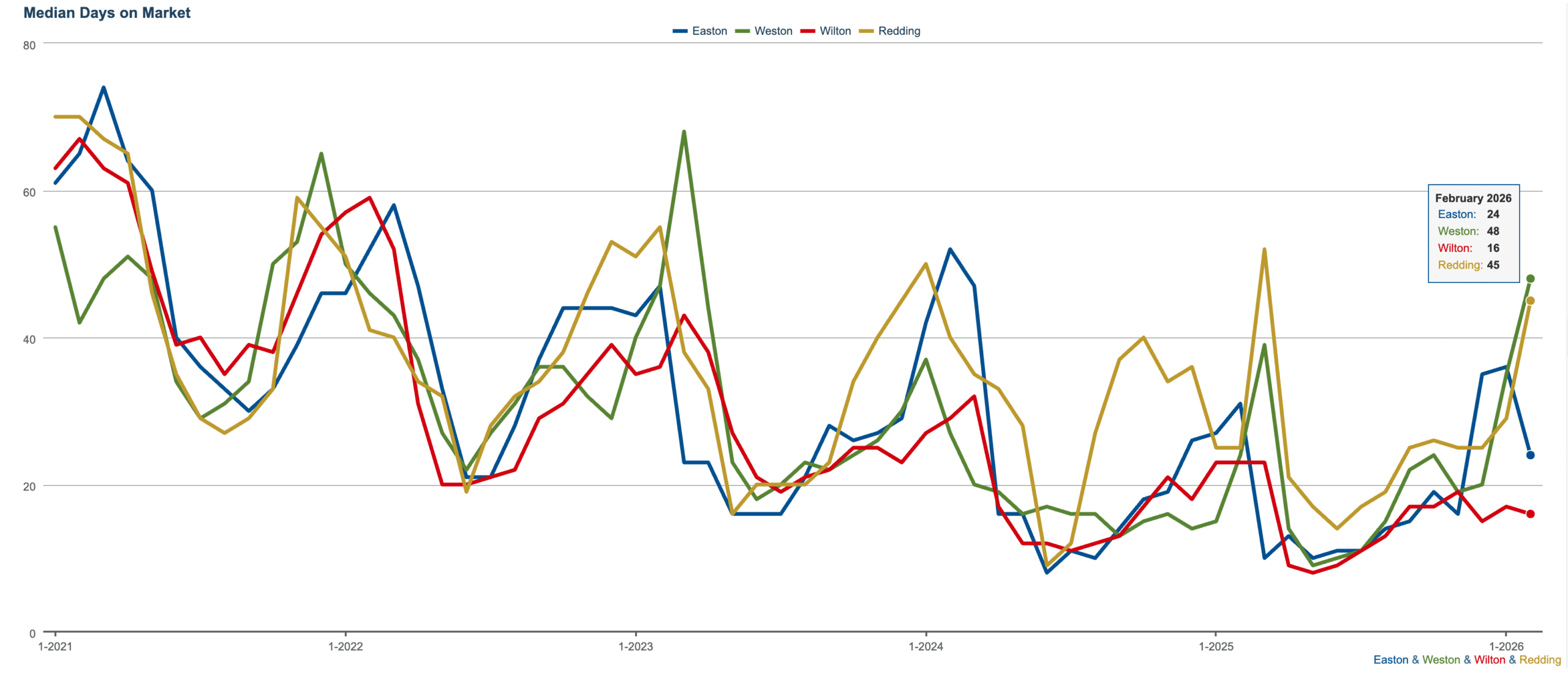
Redding’s median home price runs approximately $550,000 to $620,000, with price-per-square-foot typically landing between $220 and $260. Easton trades at a modest premium — median prices in the $600,000 to $680,000 range — and that gap is consistent enough to be structural rather than coincidental. Both towns look extraordinarily affordable compared to the shoreline corridor. The median in Westport is running north of $1.8 million. Wilton sits around $900,000 to $1.1 million. What you are buying in Redding or Easton for $650,000 would cost you $1.4 million in Wilton and wouldn’t exist at any price in Darien — you simply don’t find two-acre wooded lots with four-bedroom colonials at this price point anywhere closer to the Sound. Annual sales volume in each town is modest by county standards: roughly 120 to 160 closed transactions per year in Redding, perhaps 80 to 110 in Easton. That thinness matters for buyers. When a well-priced property appears, it moves. If you’re thinking about how to position yourself before you list, the dynamics I outlined in my piece on why homes fail to sell apply here as sharply as anywhere in the county — thin markets punish overpricing mercilessly.
COMMUTING REALITIES
Here is where Redding and Easton diverge most sharply from the rest of Fairfield County — and from each other. Neither town has a Metro-North station. This is not a minor footnote; it is the defining fact of life in both communities. Redding residents typically drive to the Branchville station in Ridgefield or to Bethel on the Danbury Branch, adding 15 to 25 minutes before they board. Total door-to-Grand-Central time from Redding runs 90 to 110 minutes on a good day. Easton is worse. Easton has no train option that doesn’t involve a significant drive — most Easton commuters drive to Westport, Fairfield, or Bridgeport on the New Haven Line, or simply drive the entire way into the city on I-95 or the Merritt Parkway. Budget 75 to 90 minutes by car on a normal morning, longer during peak compression. I’m direct about this with every buyer who calls me about these two towns: if you’re commuting to Midtown three days a week or more, Redding and Easton will wear on you. If you’re working remotely two-thirds of the time or more, they become entirely rational choices — and the price differential relative to Wilton or Norwalk suddenly looks like found money.
SCHOOLS
Easton feeds into the Joel Barlow High School district, which it shares with Redding — a regional school arrangement that both towns have operated for decades. Joel Barlow High School consistently ranks among the top public high schools in Connecticut, drawing favorable reviews from Niche and U.S. News for its academic rigor, graduation rates above 97%, and strong AP participation. Elementary education diverges: Easton students attend Samuel Staples Elementary School, while Redding children attend John Read Middle School as a feeder into the regional system. The shared high school model creates an interesting dynamic — families in both towns are effectively buying into the same secondary school outcome. Where they differ is in elementary experience, community size, and the feel of the lower school years. Easton’s elementary enrollment is small enough that teachers know every family. Redding’s system has slightly more breadth. Neither ranks at the absolute top of county school systems — New Canaan and Darien occupy that tier — but both deliver genuinely strong public education at a fraction of the property tax burden those towns carry.
CHARACTER AND IDENTITY
Redding has a history that most people don’t expect. Mark Twain spent his final years here. The town center around Redding Center and Georgetown carries a quiet authenticity that hasn’t been polished into a lifestyle brand — there are no boutique coffee shops engineered for Instagram, no restaurant rows with valet parking. What there is: stone walls, dirt roads that become genuinely impassable in February ice storms, neighbors who wave from pickup trucks, and a collective understanding that you moved here because you wanted to be left alone in the best possible sense. The Silvermine area bleeds across the Redding-Wilton-New Canaan borders, and that cross-town artistic community gives Redding’s southern edge a texture you don’t find in pure suburban towns. Easton’s character is different — more quietly prosperous, more uniformly residential. Easton has almost no commercial center to speak of. You drive to Westport or Fairfield for groceries, for dinner, for everything. That’s a feature for some buyers and a dealbreaker for others. Easton homeowners tend to have made a very deliberate choice: maximum privacy, maximum land, minimum commercial intrusion. The town has resisted development pressure more successfully than almost any other municipality in Fairfield County. If you’re doing weekend projects on a property with three acres and a barn, Easton is where that fantasy lives.
RECREATION AND LAND
Both towns are threaded with conservation land, and this is genuinely their strongest selling point for a certain buyer. Redding contains Huntington State Park, roughly 900 acres of trails, ponds, and forest that feels genuinely remote despite being 65 miles from Midtown. The Devil’s Den Preserve sits on the Redding-Weston border, 1,756 acres of Nature Conservancy land with 20 miles of marked trails — one of the largest preserves in southwestern Connecticut. Easton has the easton side of the Aspetuck Valley and direct trail access into the Aspetuck Land Trust’s preserved corridors. Trout fishing on the Aspetuck River is legitimate, not ornamental. These are not manufactured amenities; they are actual wilderness that happens to be an hour from the city. Buyers who trail run, mountain bike, horse ride, or simply want their children outside and off screens will find both towns accommodate that life better than anywhere else in the county. For buyers considering the ongoing costs of maintaining larger properties, my notes on fall maintenance discipline are particularly relevant here — rural properties demand seasonal preparation that coastal town homes simply don’t.
WHO BELONGS HERE
The buyer for Redding or Easton is specific, and I’ll describe them plainly. They have typically already lived in a train town — often Westport, Wilton, or Greenwich — and found it either too expensive, too social, or too dense for where they are in life. They are remote-friendly professionals, second-stage families whose children are old enough that proximity to the train matters less than proximity to trails, horses, or simply silence. They are buyers who have run the math and understood that $650,000 in Easton buys what $1.6 million buys in Westport, and the delta funds a decade of private school tuition, retirement savings, or a second property. Between the two towns, choose Redding if you want even a hint of a walkable village, a coffee shop, a slight sense of community gathering. Choose Easton if you want the most private, most land-intensive residential experience that Fairfield County offers at this price point. Neither town is for the buyer who needs the train five days a week, needs weekend restaurant options within walking distance, or needs the social infrastructure that the shoreline towns provide. If you’re uncertain whether you’re that buyer, be honest with yourself before you sign — I’ve seen the regret when people discover that Easton’s charm on a June Saturday feels isolating by February. The factors that determine how long you’ll stay in a home are worth thinking through carefully before committing to either of these towns.
NEARBY COMMUNITIES
Buyers comparing Redding and Easton typically also look seriously at Wilton, which offers the nearest approximation of a train-accessible rural town in the county — Metro-North service at Cannondale and Wilton stations, slightly lower lot sizes, and a more developed town center. Norwalk represents the opposite pole: far more urban, far more walkable, with the South Norwalk restaurant district and direct Metro-North express service, but no resemblance to the rural lifestyle that defines Redding and Easton. Some buyers in this search also consider the Silvermine neighborhood straddling the Wilton-New Canaan border and the Cannondale village area within Wilton — both offer rural character with marginally better commute access. The honest conversation I have with every buyer in this search is this: Redding and Easton offer the best value proposition in Fairfield County for the buyer who has truly solved the commute problem. If that’s you, both towns will reward the decision. If you haven’t solved the commute, look closer to the water and accept the price. There’s no version of this where you get everything.
Properties for Sale
Video

