
The email said time was of the essence. Then it proposed six months from listing to a signed contract. Time was of the essence, apparently, but so were the art and the antiques, and whether the house showed better with or without them.
Earlier that week, he asked the question that matters when speed is part of the objective. “There is the number brokers say a house is worth,” he said, “and there is the number at which it will sell quickly.” He wanted the second. He suspected the gap could be 35%, even in a town that spends every spring celebrating sales above asking price.
So, which is it? Urgent or six months?
Both. The urgency is real, and it is uneven. There is urgency about knowing the clearing price. Urgency about selling. Less urgency about renting. No urgency at all about buying. And a measurable hesitation about signing the agreement that starts the clock, because discussing a sale and committing to one are two different psychological events.
A move sounds like one decision. It is usually seven: whether to sell, when to sell, at what price, whether to buy or rent, where to go, whether to coordinate both ends, and whether to sign today. Urgency attaches to some of these and skips the rest. My clients can be completely sincere about selling fast while letting the rental search wait until fall. The sale solves a problem. The need for a rental creates one. Insisting on solving both perfectly is a reliable way to start neither.
In 1943, Abraham Maslow published A Theory of Human Motivation and gave us the famous sequence: physiological needs, then safety, then belonging, then esteem, then self-actualization. He never drew a pyramid. The pyramid came later, from management consultants who needed something for a slide. Maslow’s own version was messier. He wrote that the order can invert, and that most of us are partly satisfied and partly unsatisfied at every level at once. The messy version is the one I meet at listing appointments.
Start at the bottom. Health changes most timelines eventually. I have older clients who ask about Waveny, about condominiums, and about rentals, just in case. Maybe one in five acts while the question is still hypothetical. For everyone else, the planning stays optional until a fall or a hospitalization makes it compulsory. I am no better. My parents’ independence feels sustainable because it worked yesterday. We tell ourselves there is no rush, and what we mean is that nothing has forced the question yet.
 One rung up sits security, and here urgency runs in the other direction. Another owner has rented his house successfully for twelve years to a reliable tenant with a son entering New Canaan High School. The property produces income every month, and a sale would trigger depreciation recapture. I may be able to get him more than he thinks the house is worth. The number interests him. It does not yet outrank an arrangement that works, and until it does, his inertia is rational. The lease also carries something Maslow would recognize as belonging: It keeps a longtime New Canaan family in town through the son’s four years of high school.
Then there are the buyers who have solved the bottom of the pyramid and can afford to say they are in no rush. A young couple sold their townhouse and moved in with her parents. They are looking in New Canaan or Darien for three or four bedrooms, no gut renovation, and a price between $1.3 and $1.6 million. A credible list. The market will eventually make them rank it, and in my experience, price gives first.
A lot of us stretch. When Melissa and I bought our first New Canaan house, we stretched so much we had $30 left in the bank and ate our first dinner sitting on the floor. My buyers are in no rush now. They will be in a rush when the right house appears or with the four hundredth dinner at their parents’ table, whichever comes first.
And then there is the family with a closing date, the purest urgency real estate can produce. Their sale closes on a date certain. They needed a rental. I found one. They went on vacation and stopped answering my messages with the speed you might expect from a family approaching homelessness. Maslow puts shelter at the base of the pyramid. The pyramid is not always informed of the schedule.
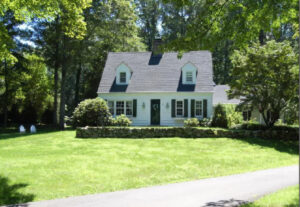
Sometimes urgency arrives before there is any unmet need. Melissa and I were newlyweds, content in our first New Canaan house and looking for nothing. My mother, who was our Realtor, disagreed. “A great deal comes up once or twice a year,” she told us, “and you drop everything when it presents itself.” This one was such a deal that the Probate Court would not even empty the house. We took it as-is, contents included.
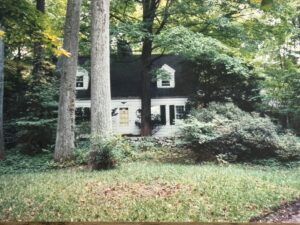 The next great deal appeared while I was away at Woodstock ‘94. Melissa bought our third house and told me when I got home: “We’re moving. I bought a house. It’s our forever home.” We stayed twenty years.
Buyers tell me they are in no rush. Sellers tell me they are in no rush. The phrase signals discipline: Nobody wants to overpay, undersell, or make one of the largest financial decisions of their lives under pressure. Yet the strongest sales in this town happen fast. Listed Thursday, shown all weekend, offers due Sunday, and a seller who spent months preparing is expected to decide by Monday. Too fast for the seller. Faster still for the buyer. That compression is often exactly how the market finds its price. No sale has ever occurred without urgency, manufactured or real.
My job is to figure out which decision is actually ready to be made. For my sellers, that means establishing the clearing price, separating the sale from the rental, and refusing to make a perfect double-move the price of starting. For the young couple, it means patience today and speed on the day the right house appears. For the landlord, it means admitting he has no problem and asking whether a number exists that would create one.
“No rush” usually means the hierarchy has not settled. My mother believed opportunity was reason enough to drop everything, and Melissa apparently agreed. Health can accelerate a move. A closing date can impose one. A good tenant can postpone one. A rare house can create one out of nowhere. We act when one need finally outranks the rest.
John Engel is a broker with The Engel Team at Douglas Elliman and writes this column weekly for the New Canaan Sentinel. He grew up in New Canaan, began his career in Greenwich, and has now bought three houses in town, only one of which he actually decided to buy himself. His mother handled the first urgency, Melissa handled the second, and he has been telling clients he understands their hesitation ever since. He serves on Planning and Zoning, co-hosts the Boroughs & Burbs podcast, and reports that his own hierarchy of needs currently ranks a working sprinkler system above self-actualization. Reach him at: john.engel@elliman.com. He is in no rush, but his sellers are.
Check out John Engel’s Podcast, Boroughs and Burbs, the National Real Estate Conversation here.
Read this article on the New Canaan Sentinel website here.
Connect & Work With John Engel and The Engel Team
As a leading resource for New Canaan real estate, we encourage you to follow our insights and connect with our team through the following platforms:
Primary Business & Profile Links
- The Engel Team Website: https://theengelteam.com/
- Work With John Engel (Douglas Elliman): https://www.elliman.com/agent/john-engel/1027584
- Read Our Reviews (Zillow Profile): https://www.zillow.com/profile/jengel199
- Realtor.com Profile: https://www.realtor.com/realestateagents/56bbf83189a68901006d6669
- Homes.com Profile: https://www.homes.com/real-estate-agents/john-engel/pkx0q7s/
National Real Estate Insights & Media
- Boroughs & Burbs Podcast (YouTube): https://www.youtube.com/@boroughsandburbs
- Podcast on Apple Podcasts: https://podcasts.apple.com/us/podcast/boroughs-burbs-the-national-real-estate-podcast/id1517094549
- Podcast on Spotify: https://open.spotify.com/show/1w2lKAeZxXglVvjJAnCmvM
Social Channels
- LinkedIn (John Engel): https://www.linkedin.com/in/jengel/
- Instagram (John Engel): https://www.instagram.com/jengel199/
- Instagram (The Engel Team): https://www.instagram.com/engel_team/
- Instagram (Boroughs & Burbs): https://www.instagram.com/boroughsandburbs/
- TikTok (John Engel): https://www.tiktok.com/@jengel199

